Modular STARK presses for fabric and steel cord belts
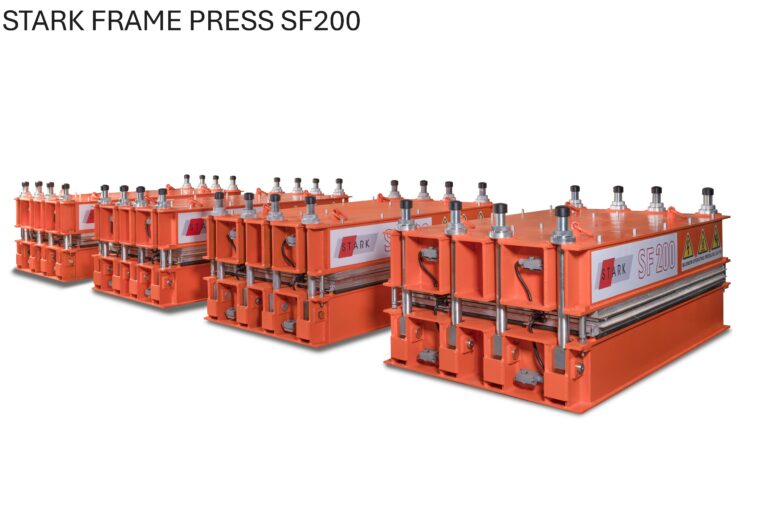
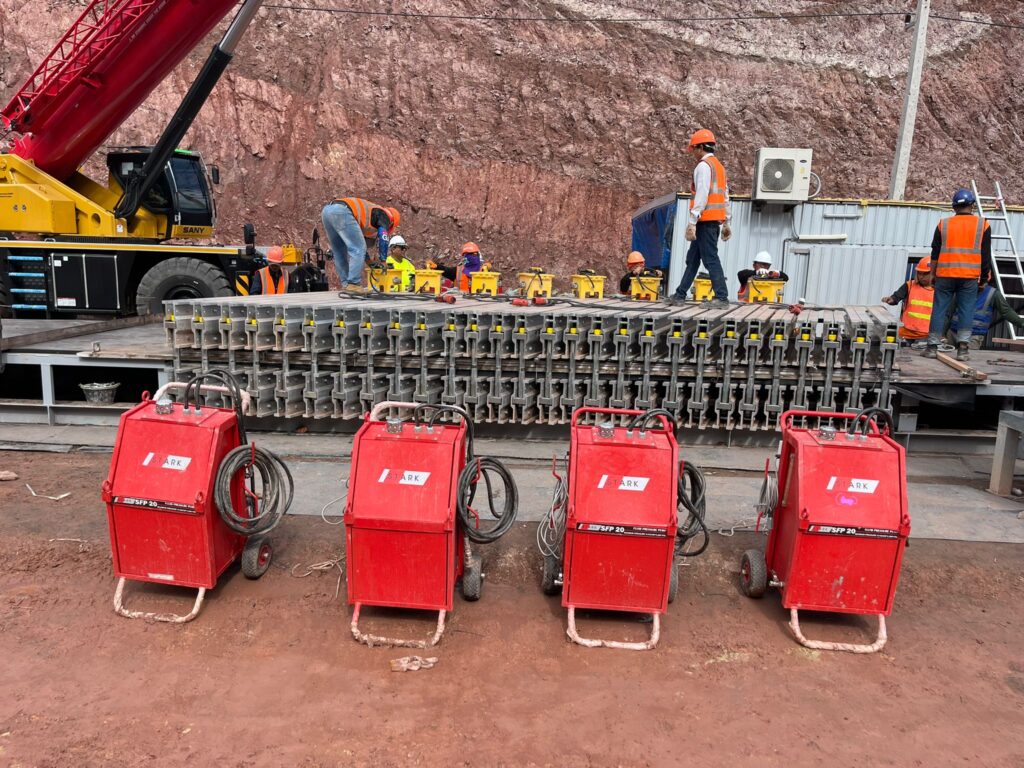
STARK sectional vulcanising presses use high-grade aluminium platens and beams in a modular traverse-bar construction. The range covers fabric ply and steel cord conveyor belt splicing, with press sections configured around belt width and the belt manufacturer’s splice dimensions.
Flexible extruded-plank platens incorporate silicone heating elements and composite insulation, while a rubber pressure bag distributes pressure across the splice area. The STARK Switchgear control box reads platen temperatures through PT100 sensors, monitors individual heating circuits and records splice data in a built-in logger. Water-cooled and air-cooled configurations are listed, with electrical supply and platen bias selected for the application.
Conveyor belt splicing applications
- Belt splicing
- Shutdown maintenance equipment
- Workshop and site press requirements
Product specifications
- Construction
- High-grade aluminium platens and beams
- Belt types
- Fabric ply and steel cord
- Vulcanising temperature
- Adjustable 0–200°C; PT100 sensor per heating plate
- Heating
- Electric shielded resistance or silicone elements
- Cooling
- Water or air cooled
- Supply voltage
- 220 / 380 / 400 / 415 / 440 / 480 / 525 V; others on request
- Platen bias
- 17° and 22°
- Control box
- STARK Switchgear with built-in splice data logger
Confirm the current configuration and technical data with MSI before ordering.
Belt and site details for press sizing
- Belt construction and manufacturer specification
- Belt width, splice length and bias
- Power supply and cooling requirements
Sectional vulcaniser press: common questions
Can a STARK sectional press splice fabric and steel cord belts?
Yes. STARK sectional presses are offered for both fabric ply and steel cord belts. The press and platen arrangement must be sized to the belt construction and the manufacturer’s required splice dimensions.
Does the sectional press record splice data?
The STARK Switchgear control box includes a built-in data logger. It also reads each heating plate through PT100 temperature sensors and monitors the individual heating circuits.
What should be supplied when enquiring about a sectional press?
Supply the belt specification, width and manufacturer’s recommended splice dimensions. Site voltage, platen bias and cooling requirements are also relevant because the sectional range is configured around those requirements.